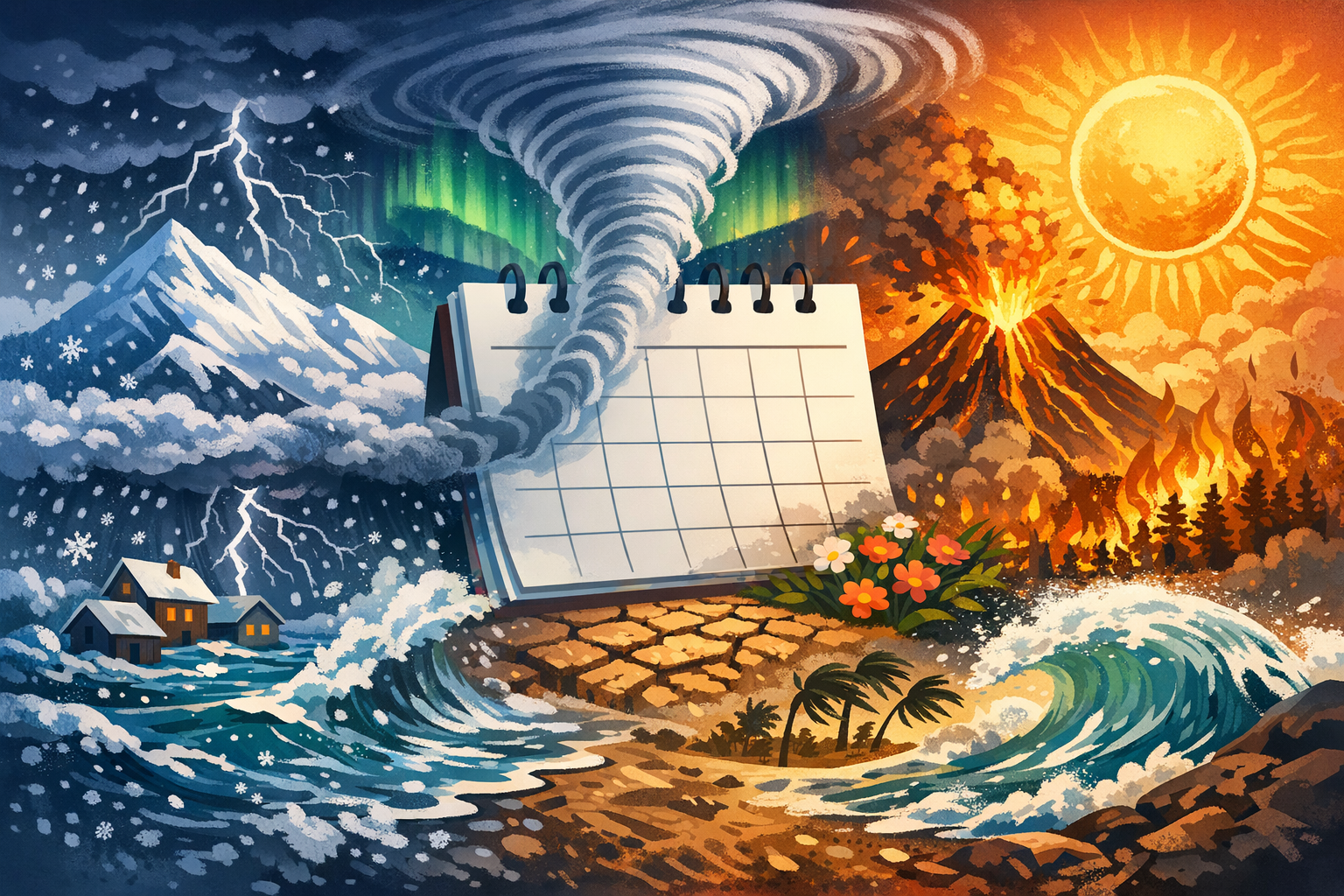
If you've stepped outside lately and thought the weather felt... off, you're not imagining things. March 2026 has delivered a relentless barrage of atmospheric surprises across the United States, from unseasonable warmth in the Northeast to rare late-season snowstorms hammering the Deep South.
A Pattern of Extremes
Meteorologists point to an unusually persistent jet stream pattern as the primary culprit. Rather than flowing in its typical west-to-east path, the jet stream has been buckling dramatically, sending Arctic air plunging south while pulling warm, moist air from the Gulf of Mexico far north of where it usually reaches in early March.
The result has been staggering temperature swings. Cities like Chicago experienced a 45-degree temperature drop in just 36 hours during the first week of the month, while Atlanta saw its latest measurable snowfall in over a decade.
What's Driving This?
Climate scientists have been quick to note that these kinds of extreme weather whiplash events are becoming more frequent. Dr. Jennifer Francis of the Woodwell Climate Research Center has long argued that Arctic warming weakens the jet stream's stability, making these dramatic undulations more likely.
"What we're seeing in March 2026 fits the pattern we've been warning about for years," Francis explained in a recent interview. "A warmer Arctic means less temperature contrast between the poles and the equator, and that's the engine that drives the jet stream."
The Human Impact
Beyond the meteorological curiosity, these weather extremes have real consequences. Farmers in the Midwest face difficult planting decisions as soil temperatures fluctuate unpredictably. Energy grids have been stressed as heating and cooling demands swing wildly from day to day.
Insurance claims from weather-related damage in the first two months of 2026 already exceed the total for the entire first quarter of 2025, according to preliminary industry data.
What to Expect Going Forward
Forecasters suggest the pattern may begin to stabilize by mid-March as the jet stream gradually returns to a more typical configuration. But the broader trend is clear: weather volatility isn't going away anytime soon, and communities will need to adapt their infrastructure and planning accordingly.
For now, the best advice remains the simplest: check the forecast before you leave the house, and don't put away your winter coat just because the calendar says spring is around the corner.