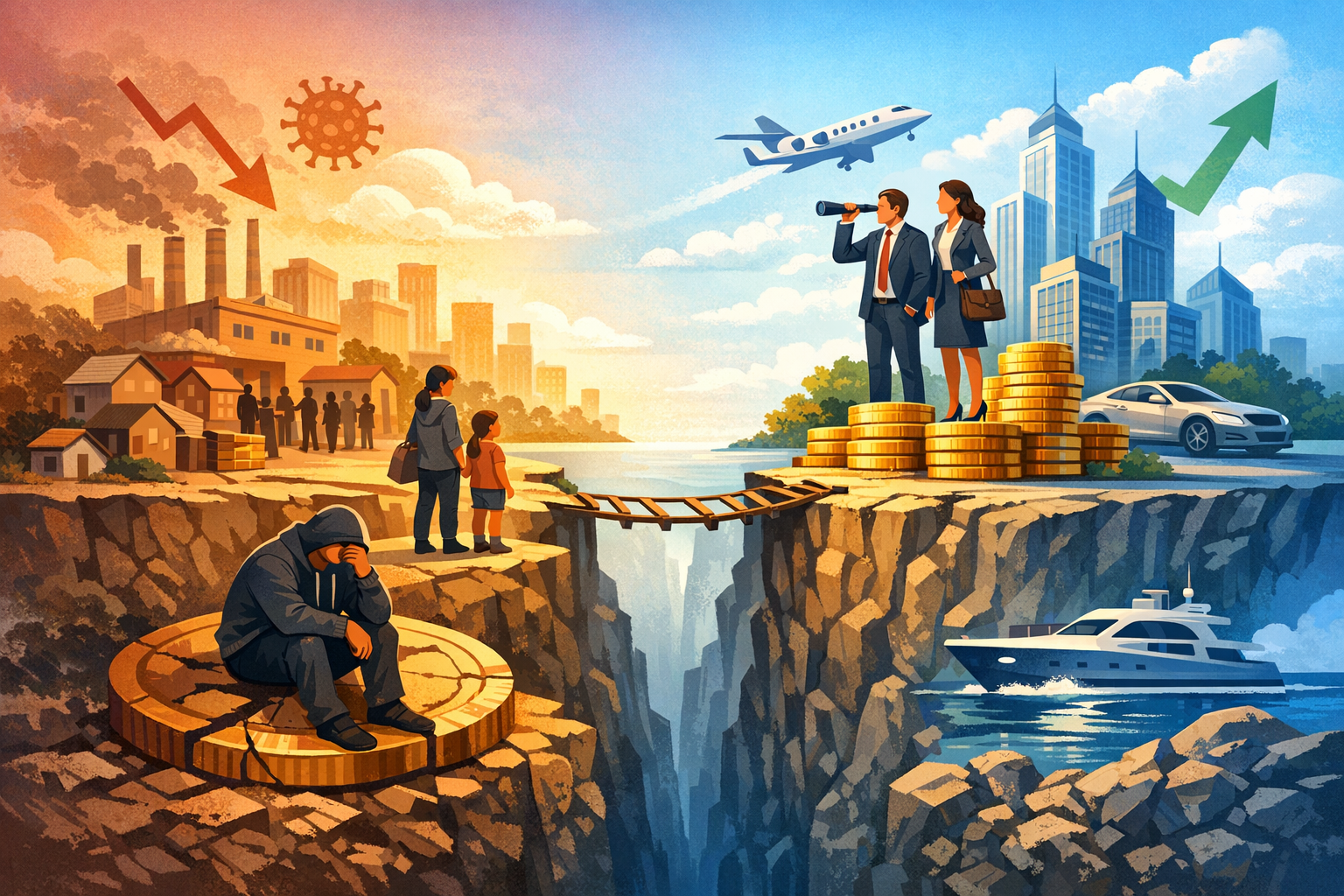
The Uneven Economic Recovery
The COVID-19 pandemic has left an indelible mark on the global economy, exacerbating existing inequalities and creating new ones. According to recent data from the World Bank, the pandemic has pushed an additional 97 million people into poverty in 2021 alone. As countries chart their paths to recovery, the disparity between wealthy and low-income nations has become starkly evident.
Global Discrepancies in Recovery
While advanced economies like the United States and European Union countries are seeing a strong rebound, thanks in part to robust vaccination campaigns and significant fiscal stimulus, many developing nations lag behind. The International Monetary Fund (IMF) highlights that Sub-Saharan Africa and Latin America are experiencing prolonged economic distress, with limited access to vaccines and financial resources stalling growth.
Addressing Economic Inequality
Governments worldwide are grappling with the challenge of narrowing the economic divide. In the United States, the Biden administration has introduced an ambitious infrastructure plan aimed at creating jobs and modernizing critical sectors. Meanwhile, the European Union’s Recovery and Resilience Facility allocates €723.8 billion to support recovery efforts, emphasizing green and digital transitions.
In contrast, lower-income countries are calling for debt relief and increased foreign aid to bridge the gap. The G20's Debt Service Suspension Initiative has offered temporary relief, but many argue that more sustainable solutions are necessary to foster long-term development.
Innovative Economic Frameworks
To tackle inequality, nations are exploring new economic frameworks. For instance, the concept of a Universal Basic Income (UBI) has gained traction in various circles as a potential tool to provide a safety net for the most vulnerable. Countries like Spain and Kenya are piloting UBI programs, assessing their feasibility and impact on reducing poverty.
Additionally, progressive taxation is being discussed as a means to redistribute wealth more equitably. The recent global minimum corporate tax agreement, endorsed by over 130 countries, aims to curb tax avoidance and ensure that multinational corporations pay their fair share.
The Role of Technology
The digital divide has also emerged as a critical component of economic inequality. The rapid shift towards digitalization during the pandemic has left those without internet access or digital skills at a severe disadvantage. Countries are investing in digital infrastructure and education to bridge this gap, recognizing that inclusivity in the digital economy is essential for equitable growth.
The Road Ahead
As the world moves beyond the pandemic, addressing economic inequality requires a multifaceted approach. Policymakers must focus on inclusive growth strategies that prioritize equitable access to resources, education, and healthcare. International cooperation will be vital in ensuring that recovery efforts are not just robust but also just.
Ultimately, the pandemic has provided an opportunity to rethink economic systems and address the root causes of inequality. By learning from past mistakes and fostering innovation, the global community can work towards a more sustainable and equitable future.