Introduction
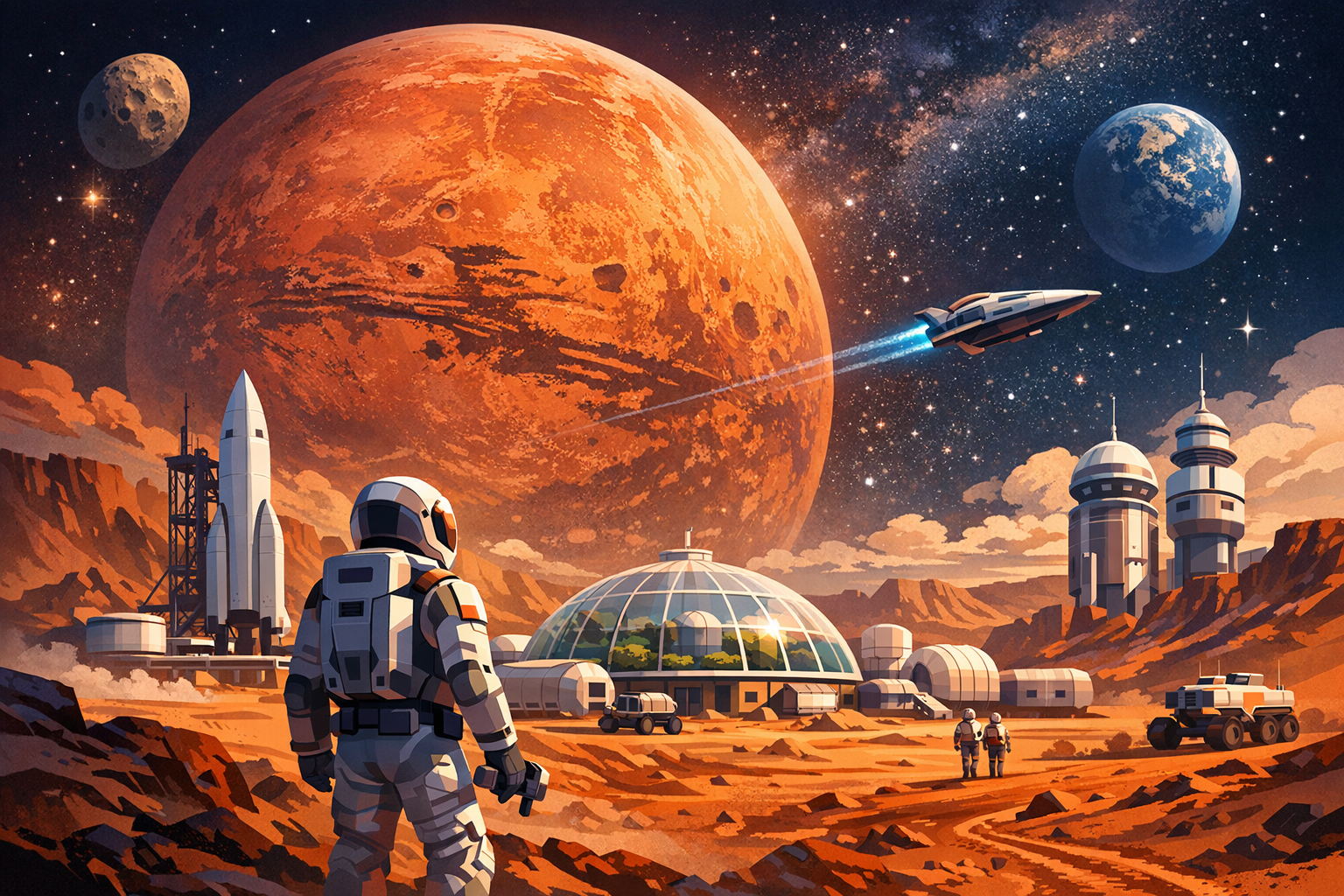
Mars colonization has captivated human imagination for decades, fueled by both speculative fiction and scientific ambition. Today, the question stands: Are we on the verge of making this dream a reality, or is it merely a distant fantasy? With significant advancements by government agencies and private enterprises, Mars colonization is no longer just a figment of science fiction but a burgeoning field of real-world exploration.
The Visionary Plans of SpaceX
Among the private enterprises making headlines, SpaceX, led by Elon Musk, remains at the forefront. Musk's ambitious goal is to establish a self-sustaining city on Mars by the 2050s. Central to this vision is the Starship spacecraft, designed to ferry up to 100 passengers per journey. The Starship's reusability and capacity for mass transport are key to reducing costs and making interplanetary travel feasible. With successful test flights completed, SpaceX aims to conduct crewed missions to Mars within the next decade.
Timeline and Challenges
While the timeline of SpaceX's Mars endeavors remains optimistic, numerous challenges persist. The journey to Mars, lasting approximately seven months, presents significant technical hurdles, including radiation exposure, life support systems, and the psychological effects of long-duration space travel. Additionally, the development of sustainable habitats on Mars is crucial, addressing issues like food production and resource utilization.
NASA's Role in Mars Exploration
Meanwhile, NASA continues to play a pivotal role in exploring Mars. The agency's Mars 2020 mission, featuring the Perseverance rover, has laid the groundwork for future human exploration by studying the planet's geology and seeking signs of past life. NASA's Artemis program, aiming to return humans to the Moon, serves as a stepping stone for eventual missions to Mars, facilitating the development of necessary technology and expertise.
International Collaborations
International collaborations are also shaping the landscape of Mars colonization. The European Space Agency (ESA) and Russia's Roscosmos are jointly working on the ExoMars program, which aims to explore Mars' surface and seek signs of life. These collaborations highlight the global interest and shared resources driving humanity's aspirations to reach the Red Planet.
Science Fiction versus Reality
While the progress is tangible, it is crucial to differentiate between speculative fiction and viable plans. Science fiction often glosses over the complexities and risks associated with space travel. In reality, the timeline for Mars colonization is still uncertain, subject to technological advancements, funding, and international cooperation.
Ethical and Environmental Considerations
The ethical implications of colonizing Mars also demand attention. The potential for contamination of Mars with Earth microbes poses a threat to both scientific integrity and the planet's environment. Moreover, the prospect of altering Mars' landscape raises questions about humanity's right to transform other planets.
The Road Ahead
In conclusion, while Mars colonization is no longer solely the domain of science fiction, it remains a long-term project fraught with challenges. The efforts by SpaceX, NASA, and other international entities have brought us closer to this goal, yet reality demands patience and perseverance. As we inch toward this new frontier, the dream of living on Mars continues to inspire, pushing the boundaries of what humanity can achieve.