A Growing Concern: Ocean Acidification
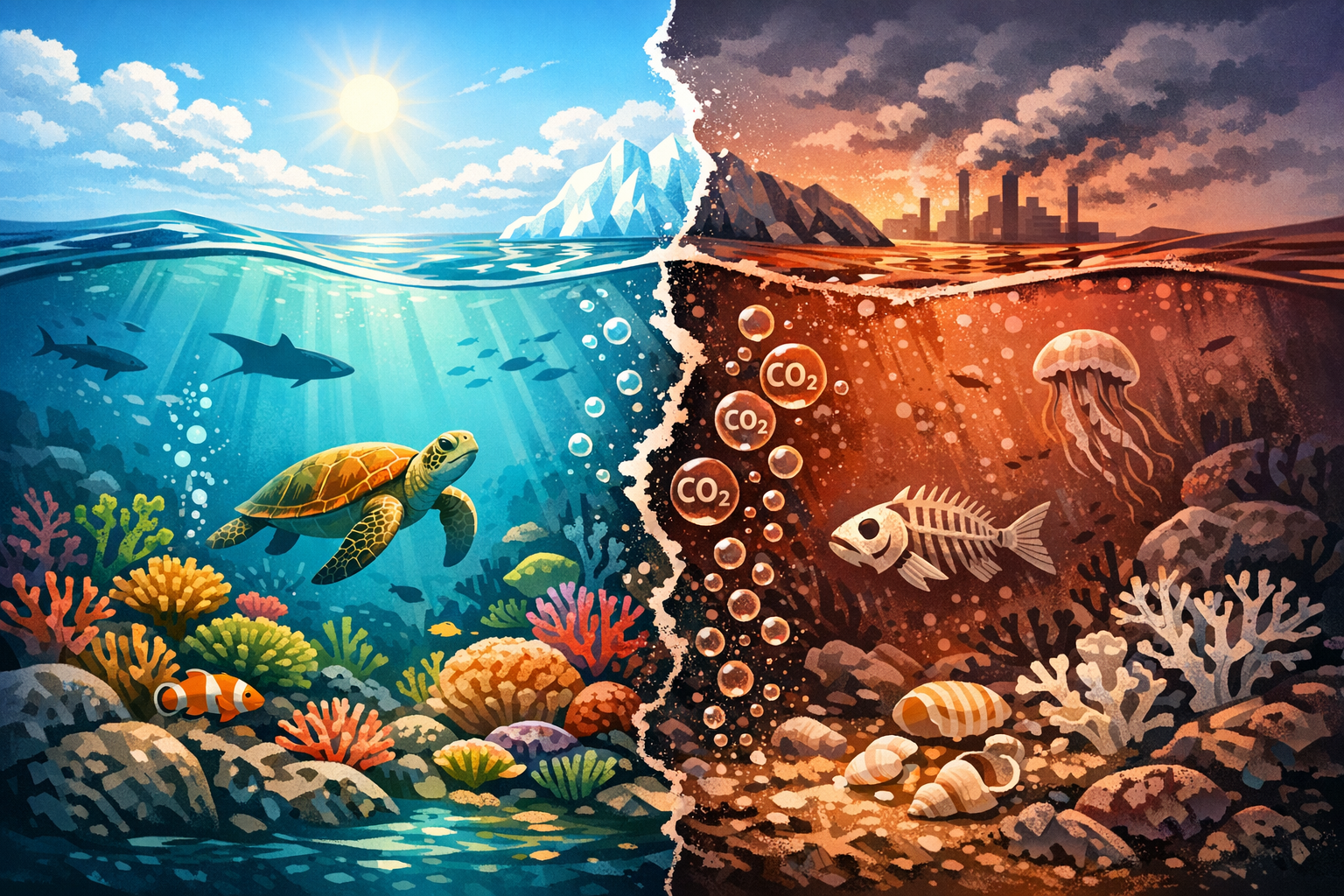
Since the dawn of the industrial revolution, human activities have dramatically increased the levels of carbon dioxide (CO2) in the atmosphere. While the effects on climate change are widely discussed, another profound consequence is ocean acidification—a lesser-known yet equally alarming phenomenon. The oceans absorb approximately one-third of atmospheric CO2, leading to chemical changes that threaten marine life and, by extension, global economies.
The Science Behind Ocean Acidification
When CO2 dissolves in seawater, it forms carbonic acid, which lowers the pH levels of the ocean. This increase in acidity can have a detrimental impact on calcifying organisms, such as coral reefs, mollusks, and certain plankton species. These organisms rely on calcium carbonate to form their shells and skeletons, but as acidity rises, the availability of carbonate ions diminishes, making it more challenging for them to survive and thrive.
Impact on Marine Ecosystems
Recent research highlights the cascading effects of acidification on marine ecosystems. Coral reefs, often dubbed the ‘rainforests of the sea,’ are particularly vulnerable. A study published in Nature Climate Change indicates that if current CO2 emissions continue unabated, over 90% of coral reefs could be at risk by 2050. The loss of these ecosystems would not only impact biodiversity but also disrupt the livelihoods of millions who depend on them for food and tourism.
- Shellfish Industry: The shellfish industry, valued at billions globally, faces significant threats as mollusks struggle to maintain their shells in more acidic waters.
- Fisheries: Acidification can alter fish behavior and physiology, potentially leading to declines in fish stocks that are crucial for global food security.
Economic Implications
The economic ramifications of ocean acidification extend beyond direct impacts on marine life. A report by the European Union estimates that the cost of damages related to ocean acidification could reach $1 trillion annually by 2100 if no action is taken. Coastal communities, particularly in developing regions, are at greatest risk as they rely heavily on marine resources for economic stability.
Innovative Mitigation Efforts
In response to these looming threats, scientists and policymakers are exploring innovative solutions to mitigate acidification. Efforts include:
- Carbon Capture and Storage (CCS): Technologies are being developed to capture CO2 emissions from industrial sources and store them underground, reducing the amount entering the oceans.
- Ocean Alkalinization: This technique involves adding alkaline substances to seawater to neutralize acidity. Trials are underway to assess its feasibility and environmental impact.
- Marine Protected Areas (MPAs): Establishing MPAs can help buffer against the impacts of acidification by conserving biodiversity and enhancing ecosystem resilience.
Global Policy and Future Directions
Collaborative international efforts are essential for addressing ocean acidification. The Paris Agreement and the United Nations’ Sustainable Development Goals underscore the need for global commitment to reducing CO2 emissions. Governments, industries, and communities must work together to implement effective strategies, ensuring the health of our oceans and the economic security they provide.
While the challenge is formidable, innovative research and proactive policy can pave the way for a sustainable future. Our oceans are at a tipping point, and the time to act is now, fostering a world where marine ecosystems and economies can flourish together.